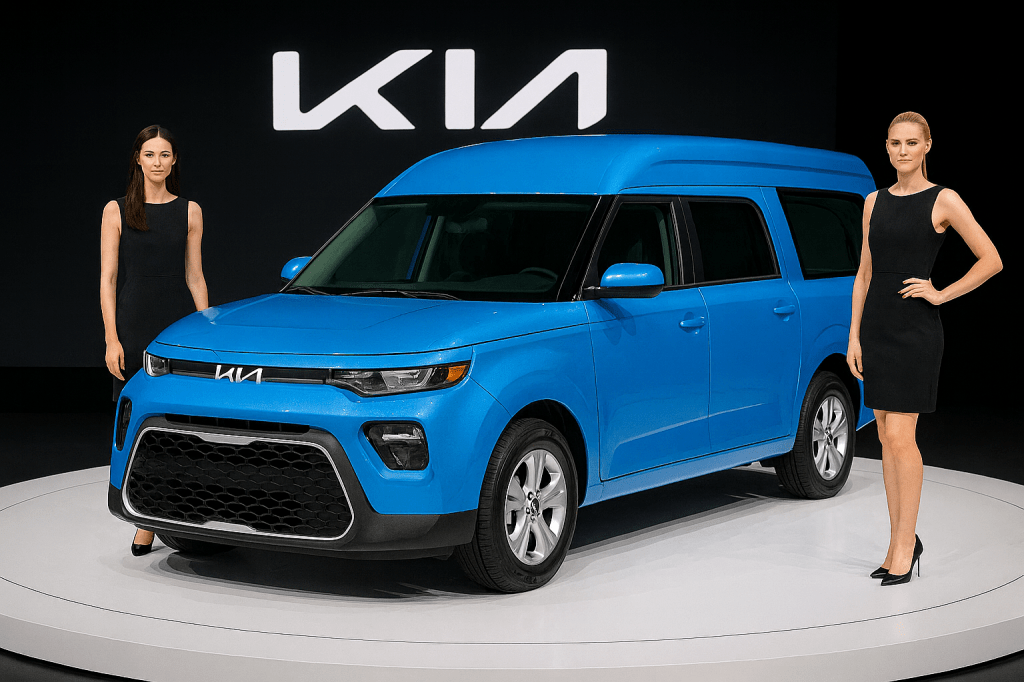
Irvine, CA – Kia, a brand long associated with practical compact cars and affordable crossovers, is now steering into a sector few automakers have ever attempted to enter: purpose built funeral hearses. The company has announced a new line of funeral coaches inspired by the upright styling of the Kia Soul, betting that the familiar squared silhouette can be reimagined into something dignified, functional, and modern for an industry that rarely sees major innovation.
For generations, the hearse segment has been dominated almost exclusively by Cadillac. Their long, stately coaches have remained the default choice for American funeral homes, even as the broader auto market has undergone seismic shifts toward electrification and advanced safety systems. According to Kia executives, this longstanding lack of competition has led to a sector that is overdue for alternatives. Many funeral homes, they note, continue to rely on aging fleets because replacement options have been limited and expensive.
Industry surveys indicate that the average hearse currently in operation is between 14 and 18 years old, with many having accumulated more than 200,000 miles of slow procession driving and idling. Kia argues that this combination of age, mileage, and usage pattern makes electric powertrains an ideal solution, since funeral routes are predictable, distances are short, and silent operation adds to the solemn atmosphere.
Built on an extended Kia Soul platform, the company’s new hearses feature a higher roofline, elongated rear quarter windows, and a squared off cargo chamber designed specifically for casket loading and secure transport. Along with classic black, Kia will offer the models in electric blue and fire engine red, a move meant to acknowledge the modern personalization trend even within ceremonial vehicles. The company says the colors not only broaden aesthetic choice but also help funeral homes differentiate their services in a competitive market.
The flagship EV Hearse model is built around a quiet, emissions free electric powertrain intended to reduce maintenance costs and provide smooth, uninterrupted operation during processions. Regenerative braking, collision avoidance technology, and lane keeping assistance come standard, representing a leap forward in safety and reliability for funeral vehicles.
Kia spokesperson Daniel Rees said the company sees a clear opening. “Cadillac has essentially gone unchallenged in this market for decades,” Rees explained. “As a result, a lot of the innovation that has become standard in consumer vehicles never migrated into funeral coaches. We are talking about electric platforms, advanced collision avoidance systems, modern braking technology, and better battery reliability. Funeral professionals deserve access to the same innovations everyday drivers do. And with the average hearse on the road today being nearly two decades old, the need for an upgrade is obvious.”
The new approach has already caught the attention of some within the industry. Funeral director Marjorie Lane of Golden Path Memorial Services said she was struck by the practicality and updated feel of the prototypes. “Families today want options that feel contemporary, respectful, and environmentally conscious,” Lane said. “When I first saw Kia’s prototype, I thought, ‘This is the future of funeral vehicles.’ They kept the solemn character we rely on, but they added practicality and, dare I say, some personality.”
Others are far more skeptical. When early concept photos circulated among industry insiders, one anonymous source offered a harsh assessment: “It looks like it was made out of shoe boxes by a 6 year old trying to make a car.” Kia representatives have brushed off such criticism, saying that bold new directions always draw mixed reactions.
Unsurprisingly, Cadillac has taken notice of Kia’s entrance into the market. Cadillac spokesperson Trent Donnelly issued a measured response when asked about the new competition. “We welcome competition in all segments,” Donnelly said. “Cadillac has earned the trust of funeral professionals for over a century. While we respect any automaker exploring this space, we remain confident that no brand understands the dignity and craftsmanship required quite like Cadillac.”
Despite Cadillac’s confidence, Kia sees the hearse line as the first step in a broader expansion into specialty and ceremonial transport. Company insiders say the automaker is actively exploring the possibility of producing its own line of limousines once hearse production stabilizes. While the idea of a Kia limousine may sound surprising to some, the company insists that modern expectations around reliability, efficiency, and cost effectiveness give it room to compete in unexpected spaces.
Lane, who has already placed a pre-order for two of the new hearses, believes that change is not only coming but necessary. “Cadillac has done a wonderful job for a long time, but industries do not evolve without someone shaking things up,” she said. “If Kia can deliver the same reliability we have seen in their consumer vehicles, they are going to turn a lot of heads and a lot of hearts.”
 Truth Bureau