UPDATE: LIFE IMITATES ART
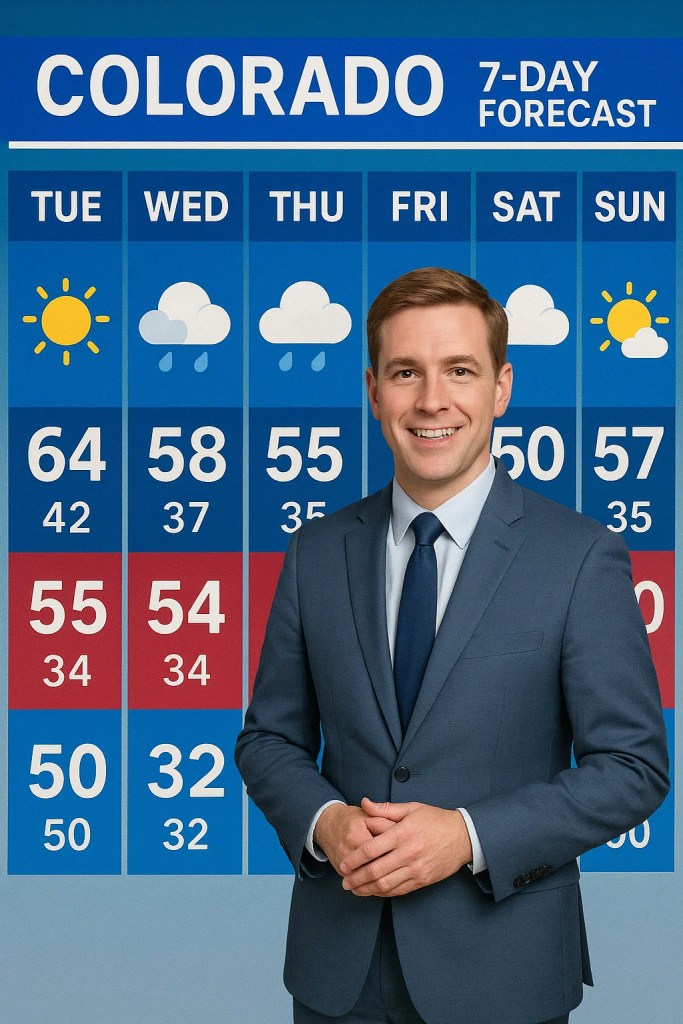
Denver – Viewers of KRVX Channel 12’s evening broadcast were surprised Tuesday night when the station’s new weather anchor appeared in front of the green screen. With a neatly parted sandy-brown haircut, warm hazel eyes, a neutral Midwestern accent, and a tailored slate-blue suit with a plain navy tie, the “man” delivering the seven-day forecast was not a man at all but a computer-generated creation named “Gale Rivers.”
Behind the polished on-screen appearance is a complex system. Gale is powered by a blend of natural language processing and real-time animation software. Off-camera meteorologists type short prompts and feed live updates into a workstation that drives his voice and gestures. The AI system translates the text into speech within two seconds and syncs the delivery with digital facial expressions and hand movements. To keep Gale from sounding stiff, the system is programmed with a library of common conversational fillers, jokes, and even polite interruptions that allow him to “banter” naturally with human anchors.
During his debut, Gale traded quips with evening anchor Marcy Tolbert. “Looks like I will need an ark for the weekend,” she joked about incoming rain. Gale replied with a line about never forgetting an umbrella “unless I am rebooting.” The illusion of precision faltered briefly when he mistakenly pointed to Kansas while discussing snow accumulation in western Colorado. The error drew chuckles from the anchors and spread quickly on social media.
Not everyone was amused. The Colorado Meteorological Association (CMA) issued a statement Wednesday condemning the use of AI weather presenters.
“This technology dehumanizes the broadcast of weather, a profession built on trust, expertise, and human connection,” said CMA President Dr. Henry Lasker. “Forecasting is more than numbers on a screen. It is empathy during a storm warning and the calm voice that reassures families. An algorithm cannot replicate that.”
KRVX says no meteorologists lost their jobs in the rollout. The station’s chief meteorologist, Denise Franklin, now works off-camera analyzing data and feeding Gale his on-air scripts. “I am still doing the forecasting,” Franklin said. “Gale is just the messenger. And he does not need coffee breaks.”
Some viewers were won over. “Honestly, I was impressed,” said Denver resident Carla Jimenez, who watched the broadcast with her family. “His delivery was smooth, his voice was easy to follow, and he even made us laugh. If this is the future, I am not against it.”
In the coming weeks, the station plans to test new features, including live viewer call-ins for “Ask Gale Anything” and localized “hyper-forecasts” delivered with mild puns. McKay believes the experiment could shape the future of local news.
“People said color TV would ruin the industry too,” she said. “Now it is just part of the landscape. Maybe one day, Gale will be as normal as the Doppler radar.”
 Truth Bureau