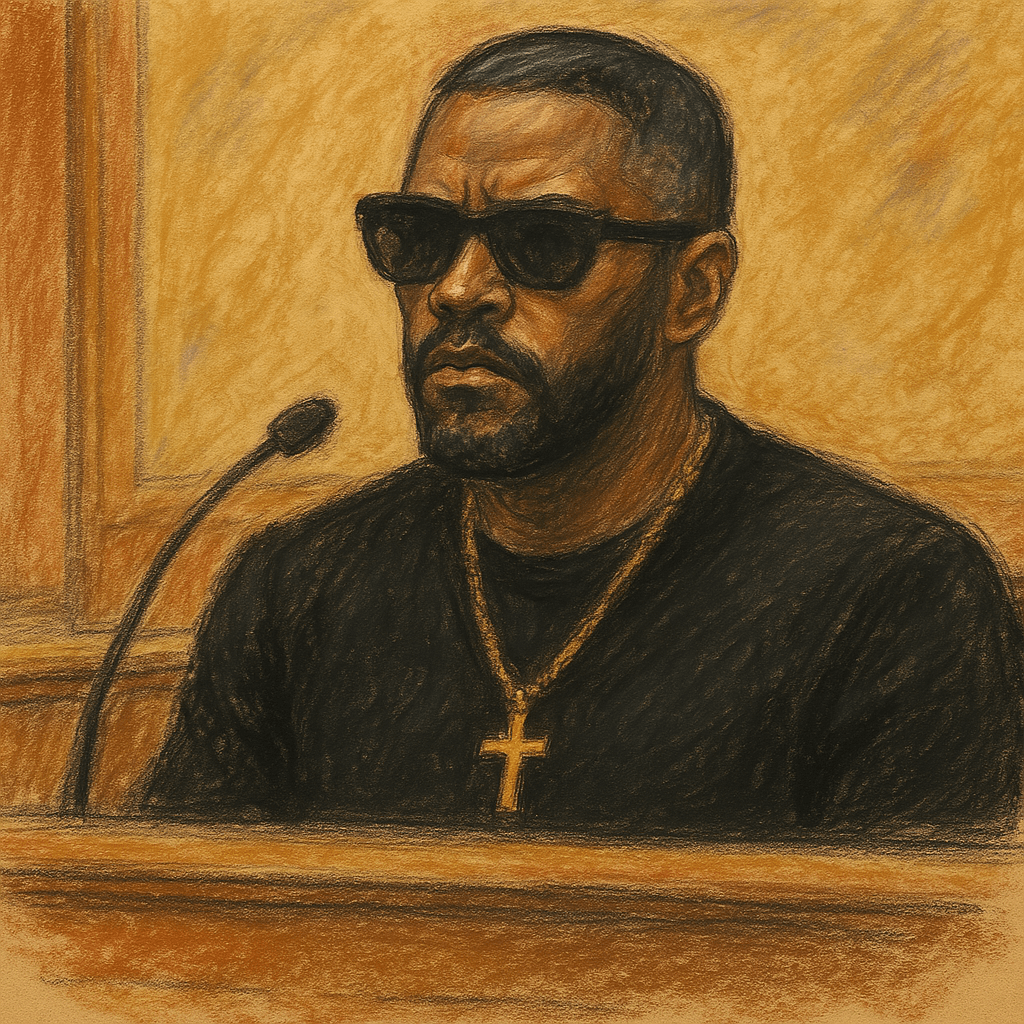
New York – Federal prosecutors in Manhattan have filed sweeping racketeering charges against Zachary “Z-King” Montclair, a prominent figure in the music industry, alleging the defendant operated a criminal enterprise involving sex trafficking and coercion.
The indictment, unsealed Tuesday in the Southern District of New York, accuses Montclair of using his business empire to facilitate illegal activities spanning over a decade. The charges include racketeering conspiracy, sex trafficking, and transportation of individuals for prostitution.
According to court documents, prosecutors claim Montclair orchestrated what they termed “elaborate coercive events” at luxury hotels across multiple states. The indictment alleges that employees were directed to prepare hotel suites with specific supplies, including large quantities of personal lubricants and other items, before these gatherings.
“The defendant allegedly used his position of power and influence to create an environment where criminal activity could flourish,” said Assistant U.S. Attorney Sarah Mitchell during a press conference. “This case demonstrates that no one is above the law, regardless of their status or wealth.”
The charges stem from a multi-year federal investigation that reportedly involved interviews with dozens of witnesses and the review of extensive financial records. Investigators allege that Montclair’s employees were instructed to handle logistics for these events, including cleanup operations afterward.
Montclair’s legal team has mounted an unusual defense strategy, arguing that their client was pursuing legitimate business interests in the adult entertainment industry. In court filings obtained by this reporter, defense attorneys claim the rapper known as Z-King was an “aspiring pornography producer” who documented the alleged events as part of his business ventures.
“Our client’s actions, while perhaps unconventional, were part of his exploration into various entertainment sectors,” said defense attorney Robert Chen in a statement. “At most, this should be treated as a regulatory matter involving film permits, not the serious federal charges being pursued.”
The defense team argues that any recordings made were for commercial purposes and that the government’s characterization of the events is “grossly misrepresentative” of what they describe as consensual adult entertainment production. Chen further elaborated that “what the prosecution characterizes as prostitution was actually legitimate compensation for adult entertainment actors performing in film productions. These individuals were paid performers, not victims of trafficking.” Prosecutors have pushed back against this defense, arguing that the evidence shows a pattern of coercion and exploitation that goes far beyond any legitimate business activity.
In a brief statement to reporters outside the courthouse, Montclair himself maintained his innocence, saying “If anything, I’m being prosecuted for letting my freak-flag fly. I’m not perfect, but these unfounded allegations are the result of my fame and position in the entertainment industry, not my actions.”
The charges have sent shockwaves through the entertainment industry, where the defendant was previously regarded as a influential figure in hip-hop and R&B music production. Several business partners have distanced themselves from the accused since the indictment became public.
The case is being prosecuted by the U.S. Attorney’s Office for the Southern District of New York, with assistance from Homeland Security Investigations and the FBI. A preliminary hearing is scheduled for next week in Manhattan federal court.
The stakes of this legal battle are enormous given the vast difference in potential penalties. If convicted on the federal racketeering and sex trafficking charges, the defendant could face life in prison, with mandatory minimum sentences of 15 years for sex trafficking offenses. The racketeering conspiracy charge alone carries a maximum penalty of 20 years in federal prison.
In stark contrast, the defense team’s preferred characterization of filming without proper permits would typically result in misdemeanor charges at the state or local level, potentially carrying fines ranging from several hundred to several thousand dollars and minimal jail time, if any. Some jurisdictions treat unpermitted adult film production as a regulatory violation subject only to civil penalties.
“The difference between a life sentence and a regulatory fine illustrates exactly why this defense strategy exists,” explained legal analyst Maria Rodriguez, who is not involved in the case. “The defense is essentially arguing that what prosecutors call organized crime is actually just paperwork violations.”
Update:
Anyone else wonder if his lawyers are Truthbureau.com readers?
 Truth Bureau